E/E Systems We Are Familiar With
We ensure the safety of your products. With expertise and standards.
MRI Scanner
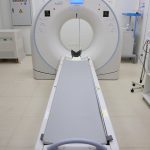
About MRI
About MRI
Magnetic resonance imaging uses a strong static magnetic field of typically 1.5 tesla and a high-frequency alternating magnetic field at the Larmor frequency of approximately 64 megahertz to tilt the spins of the hydrogen nuclei out of their alignment.
After the alternating magnetic field is turned off, the spins begin to precess freely in the static magnetic field. As they return to equilibrium, a very weak signal of approximately minus 120 dBV is detected at the receiving antennas for a duration of 30 ms to 2000 ms, depending on the tissue. Using various techniques for driving the alternating magnetic field—such as spin echo, gradient echo, and inversion recovery—it is possible to measure hydrogen-containing tissue and distinguish it in images based on its decay time. By aligning the static magnetic field gradient, the slice plane to be visualized can be freely selected.
Our MRI Expertise
Our MRI Expertise
Our MRI expertise includes the development and assembly of:
- Our MRI expertise includes the development and assembly of:
- Components of the patient table
Our team has extensive experience in the development and precise tuning of highly sensitive RF receiving antennas, as well as in the high-frequency technology of modern magnetic resonance imaging (MRI) scanners.
We also understand the mechanical and magnetic requirements for MR scanners and patient tables—from receiving materials through testing to final assembly.
Our work is conducted in accordance with relevant medical standards, particularly those relating to electrical safety, electromagnetic compatibility, and the quality and safety of medical devices.
BMS for Lithium-Ion Energy Storage Systems (ESS)

About the BMS
About the BMS
If a malfunction occurs, lithium-ion batteries can cause significant injury to people and damage to property due to fire or explosion.
The battery management system (BMS) in a lithium-ion storage system is critical to ensuring the safety and longevity of the battery. It is designed to
- Cell voltages
- Cell currents
- Cell temperatures
- State of charge (SOC)
- Consistency of the system
monitor in order to disconnect in a timely manner before dangerous conditions arise.
Proving that the BMS is capable of detecting all dangerous faults in accordance with the recognized state of the art and safely isolating them in a timely manner is not an option, but a necessity for users, your company, and those responsible.
For this reason, in addition to IEC 62619, we also design the Battery Management System (BMS) in a manner that is verifiably compliant with the functional safety standard IEC 61508.
Our Li-ion Expertise
Our Li-ion Expertise
Our specialty is bringing your BMS into compliance with IEC 61508—without incurring excessive additional costs. To this end, we provide a proven set of pre-defined specifications and analyses based on
- ISO 13849 Kategorie 2, PL d
- IEC 61508 SIL 2
These templates are specifically designed for Li-ion energy storage BMS systems and can be quickly adapted to your system. In doing so, we systematically identify safety-critical vulnerabilities in both hardware and software.
IEC 61508 has been considered the state of the art for many years and can be implemented without significant additional effort. In combination with our certification support, we efficiently demonstrate the effectiveness of the measures and demonstrably reduce risks such as fire or explosion.
This is how you protect users, businesses, and data controllers—while also building trust in your product.
Batterie Elekrische Fahrzeuge (BEV)

About BEV
About BEV
The BMS in a battery electric vehicle monitors, controls, and protects the high-voltage battery by regulating parameters such as state of charge (SoC), temperature, and cell voltage to ensure maximum performance, safety, and battery lifespan.
Our BEV Expertise
Our BEV Expertise
Wir sind auf die ISO 26262-konforme Entwicklung von batterieelektrischen Fahrzeugen (BEVs) spezialisiert und können Ihnen daher eine umfassende Unterstützung anbieten. Damit Sie die Zertifizierung der funktionalen Sicherheit effizient und sicher erreichen.
Durch die Integration von Sicherheitstechnik bereits in den frühesten Entwicklungsphasen helfen wir Ihnen, die Zeit bis zur Zertifizierung zu verkürzen und kritische Risiken wie thermisches Durchgehen, Stromschläge und durch Missbrauch verursachte Gefahren zu minimieren.
- Battery Management Systems
- Inverter
Sensoren
About Sensors
About Sensors
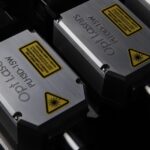
RADAR, LiDAR, and GNSS sensors enable vehicles to perceive their surroundings, detecting objects, mapping terrain, and determining position in real time to support fast, reliable decision-making. In Advanced Driver Assistance Systems (ADAS) each play distinct and complementary roles to leverage their strengths and compensate for individual weaknesses.
Wenn der Sensor ursprünglich für Verbraucher- oder Industrieanwendungen entwickelt wurde, müssen diese Technologien für den Einsatz im autonomen Fahren (ADAS) angepasst werden. Dazu gehört die Erfüllung der Anforderungen an funktionale Sicherheit und SOTIF, um ein vorhersehbares Verhalten auch in Grenzfällen oder Ausfallszenarien zu gewährleisten.
Our Sensor Expertise
Our Sensor Expertise
- RADAR
- LiDAR
- GNSS (GPS, GLONASS)
Automotive Lenkungen

About EPS and RAS
About EPS and RAS
Electric power steering systems are not only lower-maintenance and more efficient than hydraulic systems. They also improve driving stability and maneuverability and are essential for the seamless integration of ADAS features.
The rear-axle steering (RAS) works as follows:
- At low speeds (below about 60 km/h), the rear wheels turn in the opposite direction to the front wheels. This reduces the turning radius and increases agility.
- At high speeds (above about 60 km/h), the rear wheels turn in the same direction as the front wheels. This has the effect of lengthening the wheelbase and improves stability, for example when changing lanes suddenly.
- In addition, RAS supports the stability control system to help stabilize the vehicle in critical situations.
The control algorithms are based on input signals such as vehicle speed, steering torque, steering angle, wheel speeds, and yaw rate.
This makes these steering systems critical to safety. Errors, particularly in the software, can lead to unintended steering movements (“self-steering”) and cause dangerous situations, such as collisions with oncoming traffic.
Our Steering Expertise
Our Steering Expertise
The challenge lies in validating a high-performance steering system with complex software and powerful actuators in a way that does not compromise performance.
We have extensive experience in developing safe steering systems (EPS and RAS) – throughout the entire development lifecycle:
- Concept phase, including identification of critical driving maneuvers
- System, hardware, and software development, as well as system and software architectures
- Objective and subjective safety validation on test tracks with regular drivers
Chassis and Antriebsstrang Systeme

About Chassis and Powertrain Systems
About Chassis and Powertrain Systems
Chassis control systems resolve the trade-off between ride comfort and handling stability by continuously adapting to road conditions and driving situations. Typical systems include:
- PASM (Porsche): continuous adjustment of damping forces at each wheel based on road conditions and driving dynamics
- Airmatic (Daimler): Adjustment of ride height and spring stiffness
- ABC (Daimler): Semi-active suspension that uses hydraulic or electric adjustment of the spring seats to counteract roll, pitch, and vertical movement
The dual-clutch powertrain system enables fast and seamless gear shifts using two separate clutches for even and odd gears.
However, because they directly affect the chassis and wheels, faulty control systems can lead to instability and loss of control of the vehicle.
Our Chassis Expertise
Our Chassis Expertise
For many years, we have been actively involved in hardware, software, and system development, with a focus on functional safety, including the safety validation of these systems. In particular, we contribute our expertise in:
- Safety concept and design of safety functions
- Hardware and Software Development with Software Architecture
- Understanding vehicle dynamics and driver behavior
- Objective and subjective safety validation in the vehicle
